

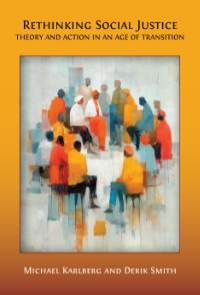

This book offers a compelling and original rethinking of social justice at a moment of global uncertainty and transformation. Tracing the emergence and evolution of modern social justice discourse, it addresses two fundamental questions: what ends should we aspire toward, and what means are most effective in pursuing them? Moving beyond familiar critiques of injustice, the authors identify a shared, though often implicit, horizon that diverse traditions of thought all orient toward: contributive justice. This positive vision of social justice centers on the creation of social conditions that enable every individual and group to develop their capacities to contribute meaningfully to collective flourishing.
Drawing on a wide range of philosophical, historical, and empirical sources, the book critically examines the strategies that have shaped social justice movements. It argues that, in the current transitional period, contentious and oppositional approaches are reaching a point of diminishing returns. In their place, the authors propose radical constructive agency: purposeful, collective efforts to build new social forms and institutions capable of supplanting anachronistic and unjust ones.
Ambitious in scope yet accessible in style, this work brings clarity to complex debates while offering a hopeful and forward-looking framework for change. Its rigorous synthesis of key concepts and traditions, combined with its innovative theoretical contributions, makes it an essential resource for scholars, activists, and anyone seeking new pathways toward a more just and inclusive society.

)